
Many small business owners assume their size keeps them invisible to modern cybercriminals. In reality, automated bots scan networks indiscriminately for unpatched software and weak passwords each and every second. You are not targeted for who you are, but for how easily your system can be breached.
PCSOFT Blog
When you examine modern corporate data breaches, the entry point is rarely a complex system hack. Most attacks succeed because they target busy schedules rather than a lack of intelligence.
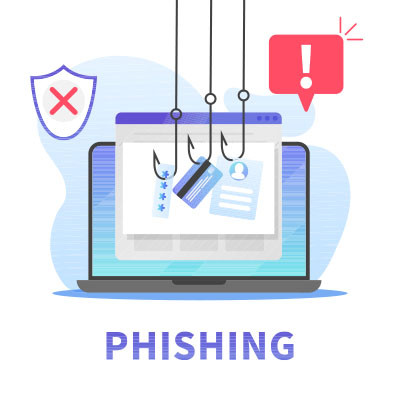
Business owners know how to manage operations, but cybercriminals look for moments when your attention is stretched thin. Modern phishing schemes do not rely on complex software alone. They focus on taking advantage of your daily cognitive workload.
Imagine one of your employees receives a phone call from someone who sounds exactly like you. They have your cadence, your "ums," and even that specific way you clear your throat before getting down to business. Would they be able to tell it’s a deepfake, or would they follow the instructions to urgently reset a password or move funds?
If you can’t answer that with an emphatic "yes," you’ve got some work to do. We’ve moved far beyond the era of the Nigerian Prince emails and obvious typos. We are now in the age of highly polished, AI-driven social engineering where the "bad guys" are using your own identity against your team.
Modern gadgets make running a business easier. From smart thermostats and lightbulbs to connected coffee machines, the Internet of Things (IoT) brings a lot of convenience to the workplace. However, because these devices are built for speed and low cost, they often skip the security features your business actually needs.
Essentially every smart device in your office is a potential digital back door for hackers. Let’s take a look at how IoT—as helpful as it can be—can also be a big problem.
For literal decades, we heard that a good password required a few key traits to be secure: a capital letter, a number, and eight characters. How times have changed, right?
Now, the baseline standards are similar… just multiplied to the nth degree. Let’s discuss why this is, what modern businesses now need to do, and how we can help to maintain password security moving forward.
Technology has dramatically reshaped the way we work, with remote teams becoming not just a convenience but often a strategic imperative. With every door that opens, however, a new set of challenges emerges, particularly concerning the often-underestimated cornerstone of remote operations, the security of your systems and data.
If you are like most people, you are probably juggling a million things at work, and when an email pops up from your boss, your instinct is to take it seriously. Hackers know this, and they're getting good at creating fake emails that look exactly like they're from your manager to get you to make a mistake and give them what they need to access your digital accounts and the data that lies therein.
There are a lot of sketchy parts of the Internet, but the sketchiest of all might be the Dark Web. Located on a part of the Internet that search engines don’t index and inaccessible to most web browsers, the Dark Web is a place where cybercriminals thrive. It’s a place where stolen data is put up for sale, and if you’re not careful, your business could be next.
Unfortunately, cybersecurity is one of the most important topics to consider in today’s business world. A recent survey has shown that the majority of security leaders—approximately 67% of those surveyed—don’t know what caused a cybersecurity incident at their business. This is a shockingly high number that cannot be ignored, so let’s look at why data breaches are so challenging to identify and address.
That’s not hyperbole. This isn’t some click-bait title to try to get you to care about cybersecurity. A password you use has certainly been stolen, and statistically, more than one of your passwords has likely been compromised.
How this affects you depends on a number of factors, so let’s get into that, and talk about how you can protect your identity, your business data, your customers, and prevent a whole lot of problems.
As cyberthreats become more advanced, businesses must take proactive steps to address them. Cyberattacks can have devastating effects, making it crucial to enhance employees’ awareness of online threats. This month, we examine the top three IT security challenges businesses face and how to combat them effectively.
Imagine this scenario: amidst your daily routine, an email arrives in your inbox, seemingly from a cybersecurity company. The alarming assertion is that you've become the target of a hacking attack. Despite lacking IT expertise and being unfamiliar with your security agency's procedures, you trust the message and respond promptly. Unbeknownst to you, the email is a shrewdly disguised cyberthreat, ensnaring you in their trap.
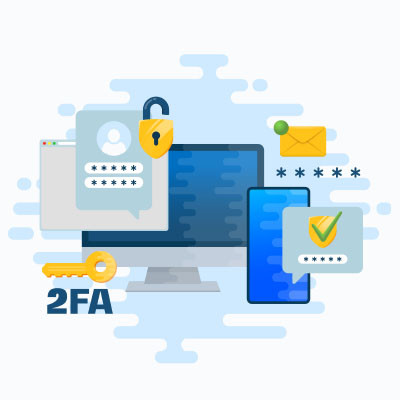
Data security is one of those things that you have to stay out in front of. Hackers and scammers are changing tactics and getting a little more sophisticated as time goes on and it creates a pretty difficult situation for most IT administrators. Utilizing multi-factor authentication (MFA), two-factor authentication, or whatever it is called by the application you are using has become a great way to add an extra layer of security to organizational data protection efforts. Today, we will discuss the benefits of this strategy and why it isn’t a be-all, end-all to your overall security.
It should come as no surprise that one of the biggest online retail days of the year also incites a lot of scams and threats targeting not just consumers, but online businesses as well. Let’s go over some of the major statistics surrounding online retail scams and what you should know as you navigate the post-holiday chaos.
Social media has become deeply ingrained in today’s culture, from business to personal connection. Businesses stake their reputation on the platforms, and individuals and families use them to connect with one another in ways they never were able to before. This is why it’s so scary to think about what would happen if an account were hacked or taken over.
Let’s look at how social media hacks are disruptive and potentially catastrophic to a business owner.
When it comes to who is victimized in cybercriminal efforts, there may be a few stereotypes and presumptions that a lot of people may hold. A recent report, Oh, Behave!, released by the National Cybersecurity Alliance and Cybsafe, shows that the real victims of many forms of cybercrime aren’t who many would expect.
Modern businesses depend on cybersecurity to help keep operations from being targeted by hackers and other cybercriminals. Businesses need to be both resilient and agile in how they protect their infrastructure from these threats. Let’s discuss four of the most important ways your business can protect itself from the growing threats of malware, ransomware, phishing attacks, and other cybersecurity threats.
World Password Day is indeed a thing, and it’s a thing to celebrate in the world of business technology, as it celebrates password awareness and advocates account security in a time when cybersecurity has never been more important. To help you observe World Password Day, we want to go over why passwords are important and why you need to take password security seriously.
We focus a lot of our attention on securing our clients’ computing infrastructures from the large amount of threats that are out there. We look to legitimately protect the entire network and infrastructure with our tools and expertise. The hackers, on the other hand, understand that they are more apt to be successful if they target certain users of your organization. Let’s look at a potential profile of someone that a savvy hacker would like to target.